
How to Make Your Bed Feel Like a Hotel Bed at Home

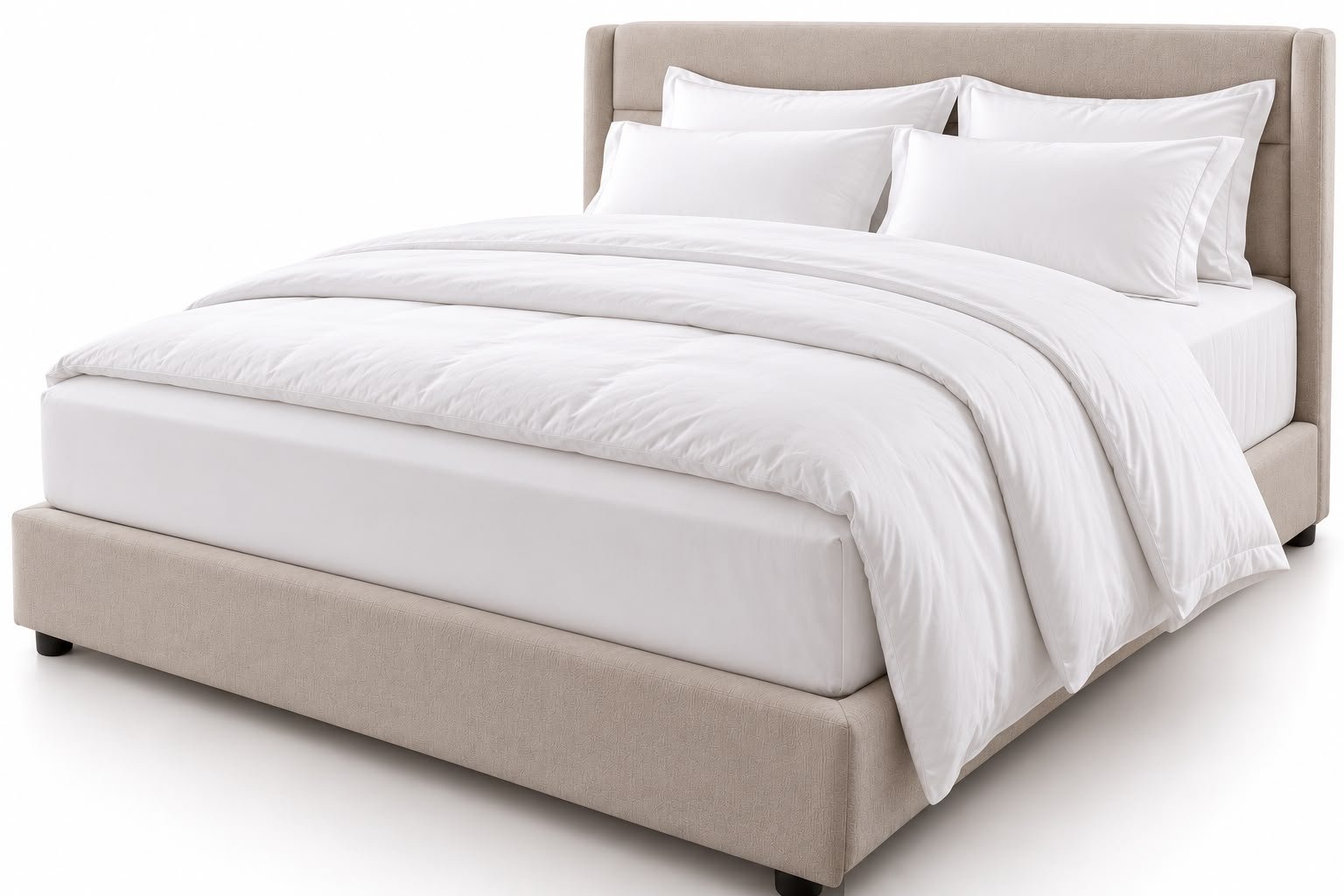
How to Get a Hotel-Style Bed at Home
How to Get a Hotel-Style Bed at Home
Have you ever checked into a hotel, looked at the bed and immediately wanted to lie down?
The mattress looks thick and inviting. The sheets feel smooth and crisp. The pillows look wonderfully plump, and the comforter gives the bed that soft, luxurious appearance.
Then you return home.
Your own bed may be perfectly comfortable, but somehow it doesn’t look or feel quite the same.
Why?
The secret isn’t necessarily an expensive mattress or a famous hotel brand. A hotel-style bed is created by combining several elements: the right mattress, a plush comfort layer, well-fitted sheets, supportive pillows and a generously filled comforter.
At Kaththokra Studio, we believe good design begins with understanding how things work. A beautiful bed is not simply a mattress placed on a bed frame. It is a carefully considered combination of structure, materials, proportions and comfort.
The good news? You can recreate much of that hotel-like experience in your own bedroom without buying an entirely new bedroom set.
Let’s break it down, layer by layer.
- Start with the Right Mattress: Why Consider Pocket Springs?
The mattress is the foundation of your sleeping experience. No amount of beautiful bedding can compensate for a mattress that fails to support you comfortably.
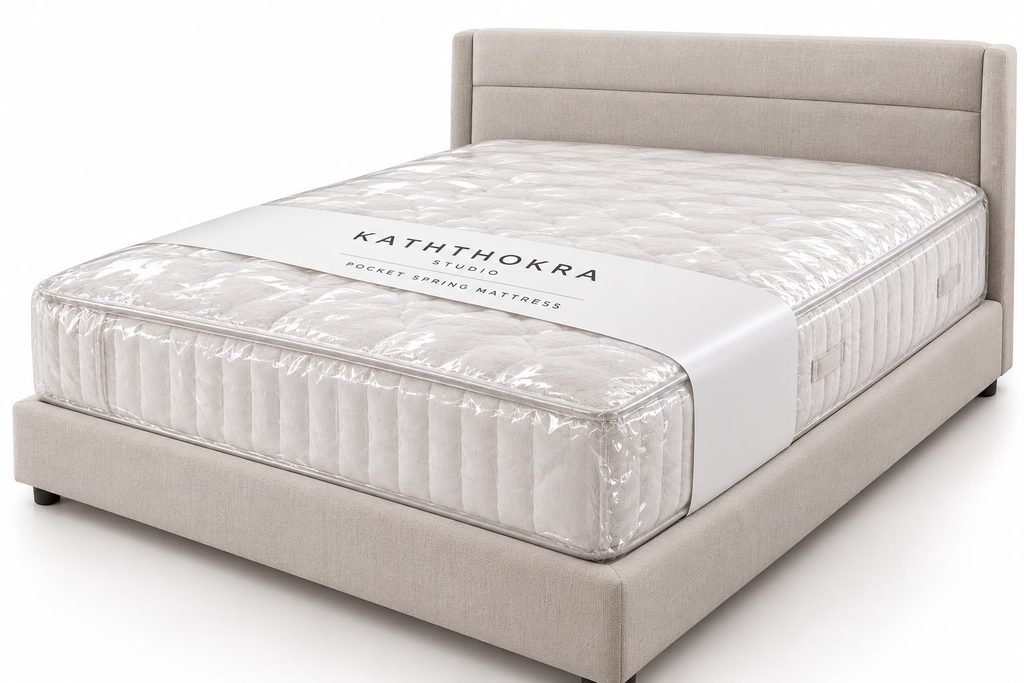
For people who want a luxurious, hotel-inspired bed, a pocket spring mattress is worth considering.
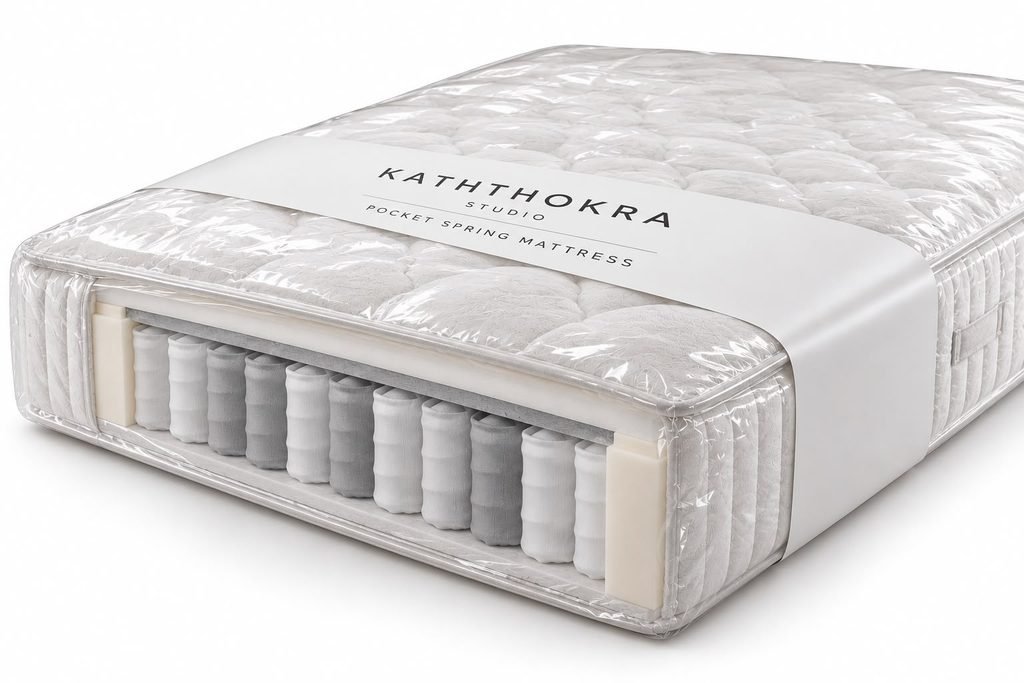
Unlike a traditional interconnected spring system, a pocket spring mattress contains individual springs wrapped in fabric pockets. Each spring can respond more independently to pressure from the body.
This construction can help the mattress contour to your body and reduce the transfer of movement when someone else turns over in bed. The overall result depends on the spring unit, comfort layers, firmness and mattress construction not simply the spring type.
What should you look for?
When choosing a pocket spring mattress, consider:
- Balanced support: Your body should feel supported without excessive pressure on your shoulders and hips.
- Comfort layers: Foam, latex or other cushioning materials above the springs influence how soft or firm the mattress feels.
- Motion isolation: Independent springs can help reduce disturbance from a partner’s movements.
- Edge support: A well-constructed perimeter helps the mattress retain its shape and provides a more stable sitting edge.
- Suitable firmness: Medium or medium-firm can be a useful starting point, but your preferred sleeping position and body shape matter.
Remember, not every hotel uses pocket spring mattresses, and pocket springs alone do not guarantee a five-star sleep experience. The objective is to find the right balance of support and surface comfort for you.
- Mattress Thickness: How to Get That Luxurious Hotel-Bed Look
One detail that immediately makes a bed look more luxurious is the visible thickness of the mattress.
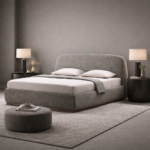
A very thin mattress can make a bed look visually light, while a deeper mattress combined with a substantial bed frame and upholstered headboard can create a more substantial, hotel-suite appearance.
As a practical starting point, consider these approximate dimensions:
Mattress profile Thickness Visual effect
Standard 6–8 inches (15–20 cm) Simple, relatively low-profile
Deep 9–10 inches (23–25 cm) Substantial and versatile
Premium deep profile 10–12 inches (25–30 cm) A fuller, more luxurious appearance
Extra-deep Over 12 inches (30 cm) Dramatic, depending on the bed design
These are styling guidelines, not a universal hotel standard. Mattress quality cannot be determined by thickness alone.
Our suggestion: If you are starting from scratch and want a fuller hotel-inspired appearance, explore a well-constructed mattress around 10–12 inches thick, provided its support, firmness and construction suit your needs.
But there is another detail to consider: the height of the bed itself.
A thick mattress on a low bed frame may still look relatively low. A moderately thick mattress on a carefully proportioned upholstered bed can look much more luxurious.
The mattress, bed frame, headboard and finished sleeping height should work together as one design.
- The Secret Layer: A Mattress Topper
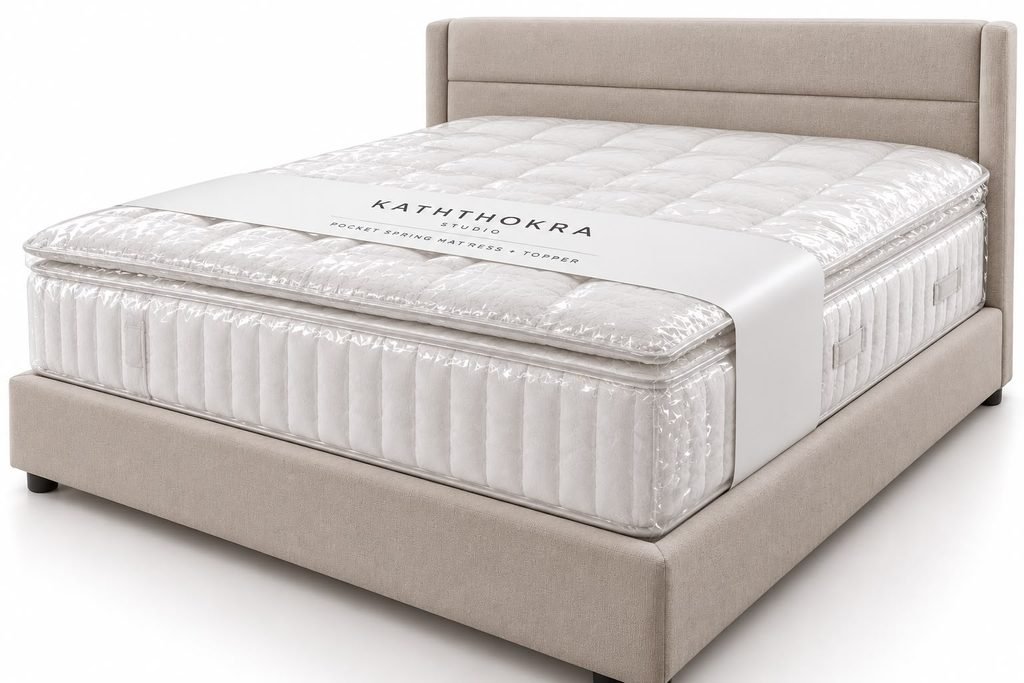
If there is one addition that can make a noticeable difference to the surface feel of a suitable mattress, it is a mattress topper.
A topper sits above the mattress and introduces an additional comfort layer. Depending on its material and construction, it can make the surface feel softer, more cushioned or more responsive.
For a hotel-inspired setup, consider a topper approximately 2–3 inches (5–7.5 cm) thick as a starting point.
Which topper should you choose?
Plush fibre or quilted topper: Adds a soft, padded surface and a fuller appearance.
Memory foam topper: Conforms more closely to the body and can provide pressure relief, although some types retain heat.
Latex topper: Offers a more buoyant feel and generally responds more quickly to movement than traditional memory foam.
Down-alternative topper: Provides a softer, cushioned feel and can create a plush surface without using down.
The right choice depends on your mattress and your preferred sleeping temperature. A topper can improve the surface comfort of a suitable mattress, but it cannot repair a badly sagging or structurally worn-out one.
How to layer it correctly
The usual order is:
- Mattress
- Mattress protector
- Mattress topper
- Fitted sheet
The fitted sheet must be deep enough to cover the mattress, protector and topper together. Otherwise, the corners may pull loose during the night.
That small detail can make the difference between a neat, hotel-like bed and one that looks untidy by morning.
- Bedsheets: The Difference Between a Bed and a Hotel Bed
Look closely at a well-made hotel bed.
The sheets are smooth, the corners are tucked neatly, and the surface looks clean and uninterrupted.
This is where material quality and presentation come together.
Choose the right fabric
Cotton percale: Usually has a crisp, matte feel and is a good option for people who prefer breathable bedding.
Cotton sateen: Has a smoother, slightly lustrous finish and can feel silkier against the skin.
Cotton blends: Can be practical, depending on the blend, care requirements and desired feel.
In a warm, humid climate such as Dhaka, breathable fabric and easy laundering deserve particular attention.
Does a higher thread count always mean better quality?
No. Thread count is only one factor. Fibre quality, yarn construction, weave and finishing also influence how sheets feel and perform.
Rather than choosing sheets based on the highest number printed on the packaging, look for fabric that feels comfortable, breathes well and withstands repeated washing.
Why white sheets work so well
White bedding is strongly associated with the classic hotel aesthetic because it creates a clean, bright and coordinated appearance.
However, white is not compulsory. Ivory, warm beige, pale grey and other restrained neutrals can create a similarly refined look.
The important thing is consistency.
Choose sheets that fit properly and smooth them out before adding the upper bedding layers.
- Pillows: Build Comfort and Height
A luxurious bed should look inviting before you even touch it.
Pillows play a major role in achieving that appearance, but they also need to provide suitable support while you sleep.
For a double or king-size bed, you might start with:
- Two comfortable sleeping pillows for two sleepers.
- Two additional pillows or larger decorative shams to create height and symmetry.
- Optional accent cushions if you prefer a more styled appearance.
The precise arrangement depends on the width of your bed and headboard.
Choose pillows for the way you sleep
Side sleepers often need a higher-loft pillow to fill the space between the head and shoulder.
Back sleepers may prefer a medium loft.
Stomach sleepers generally need a lower, softer pillow to avoid excessive neck extension.
These are starting points rather than rigid rules. Your body shape and comfort preferences matter.
How to achieve the hotel look
Place the sleeping pillows neatly against the headboard. Add larger pillows behind or in front of them to create depth.
For a restrained, luxurious look, coordinate the pillowcases with your sheets. You do not need a dozen decorative cushions.
The goal is a bed that looks generous and inviting without becoming impractical.
- The Comforter: Create the Soft, Full Appearance
A comforter or duvet is often the most visually prominent layer on a hotel-style bed.
It creates the soft, continuous surface that makes the bed look inviting. When properly sized and filled, it adds volume without requiring lots of decorative cushions.
What should you look for?
Consider three factors.
Fill: Down, down-alternative fibre and other synthetic fillings offer different combinations of loft, weight, warmth and maintenance.
Thickness and loft: A fuller comforter creates a more substantial appearance, but the amount of insulation should suit your room temperature.
Outer fabric: A smooth, breathable cover contributes to the overall feel and appearance.
For homes in Bangladesh, a lightweight or medium-weight comforter may be more practical than a very thick winter duvet, particularly in rooms without air conditioning.
Choose the warmth level according to your actual sleeping environment.
How to make it look luxurious
Use a comforter large enough to drape neatly over the sides of the bed.
Spread it evenly, smooth out the surface and fold the top portion back slightly to reveal the sheets underneath.
This creates the layered appearance associated with hotel bedding.
A white or neutral comforter works particularly well, although you can introduce colour through cushions, a throw or an upholstered headboard.
- Don’t Forget the Mattress Protector
A mattress protector is not the most visible part of the bed, but it is an important part of the setup.
It helps protect the mattress from sweat, spills and everyday soiling. Some protectors also offer additional allergen-barrier properties.
Choose a protector that fits securely and does not introduce an unwanted crinkling sound or noticeably alter the mattress feel.
If you add a thick topper, check that both the protector and fitted sheet are designed for the resulting height.
A luxurious bed should be comfortable, practical and easy to maintain.
- The Complete Hotel-Style Bed Formula
Here is a simple setup you can use as a shopping checklist.
- Component Suggested starting point Main purpose
- Bed frame Well-proportioned frame with a suitable headboard Establishes the overall look and height
- Mattress Quality pocket spring, around 10–12 inches thick if suitable Support and a substantial mattress profile
- Mattress protector Well-fitting, breathable option Protects the mattress
- Mattress topper Approximately 2–3 inches, depending on desired feel Adds surface cushioning and visual depth
- Fitted sheet Deep enough for the complete mattress setup Creates a smooth base
- Flat sheet Breathable cotton or a suitable blend Adds a classic hotel-style layer
- Sleeping pillows Chosen according to sleeping position Head and neck comfort
- Additional pillows Optional coordinated layers Creates height and symmetry
- Comforter or duvet Appropriately sized and filled Adds warmth, softness and volume
- Optional throw Coordinated with the room Finishing touch
These dimensions are starting recommendations, not mandatory specifications. The correct combination depends on your mattress, bed frame, climate and personal comfort.
The order matters
Build the bed from the bottom up:
Mattress → protector → topper → fitted sheet → flat sheet → comforter → pillows.
If you use a mattress topper, make sure the fitted sheet accommodates the additional height. If you use a duvet with a separate cover, the cover should fit the insert without excessive bunching.
- Common Mistakes That Prevent a Hotel-Like Experience
Even expensive bedding can disappoint if the combination is wrong.
Buying a mattress based on thickness alone. A thick mattress is not automatically more supportive or comfortable.
Choosing an overly soft topper. Too much cushioning can undermine the support you need from the mattress underneath.
Using shallow fitted sheets. The sheet may slip off when it cannot accommodate the mattress and topper together.
Buying too many pillows. Decorative pillows should enhance the bed, not make it difficult to use.
Choosing a comforter that is too warm. A thick comforter may look luxurious but be uncomfortable in a warm room.
Ignoring proportions. Mattress height, bed-frame height, headboard scale and bedding dimensions should complement one another.
The best hotel-inspired bed is not necessarily the most expensive one. It is the one where all the layers work together.
Final Thoughts: Design Your Own Hotel Experience
A hotel-like bed is not one magical product. It is the result of thoughtful choices.
A supportive mattress establishes the foundation. A topper adjusts the surface feel. Sheets introduce a crisp, comfortable layer. Pillows provide suitable support and visual depth. A well-chosen comforter completes the experience.
At Kaththokra Studio, we believe good design becomes more accessible when people understand the thinking behind it.
You do not need to copy an entire hotel room to recreate the pleasure of a well-made hotel bed. You need to understand the elements that create the experience—and choose the right combination for your own home.
Because luxury is not simply about buying more. It is about making better choices.
⸻
Frequently Asked Questions
- What type of mattress is best for a hotel-style bed at home?
A well-constructed pocket spring mattress is one option worth considering because individually pocketed springs can provide responsive support and help reduce movement transfer. Comfort layers, firmness and overall construction are equally important.
- How thick should a mattress be to look like a hotel bed?
A mattress around 10–12 inches (25–30 cm) can create a substantial appearance, but thickness alone does not determine comfort or quality. The bed frame, topper and finished sleeping height also influence the result.
- Does a mattress topper make a bed feel like a hotel bed?
A topper can add cushioning and adjust the surface feel of a suitable mattress. It is one part of the complete setup, alongside sheets, pillows and a comforter.
- How thick should a mattress topper be?
A 2–3-inch topper is a reasonable starting point for people seeking a more cushioned surface. The best thickness depends on the topper material, existing mattress and desired feel.
- What bedsheet fabric gives a hotel-like feel?
Cotton percale is a good choice for a crisp, breathable finish, while cotton sateen generally feels smoother and has a subtle sheen. Fibre quality and weave matter as much as thread count.
- How many pillows do I need for a hotel-style bed?
Start with the sleeping pillows you actually need. Additional pillows can create a fuller appearance, but the ideal number depends on the bed size, headboard and personal preference.
- What makes a comforter look luxurious?
Suitable sizing, even filling, a smooth outer cover and enough loft to create a soft surface all contribute. Choose a warmth level that suits your room rather than selecting the thickest option available.
⸻
About Kaththokra Studio
Kaththokra Studio explores furniture through design, material, function and human experience. We believe that understanding design helps people make more thoughtful decisions about the spaces they live in.


 Chair
 International Trend
 Bed & Bedding
 Cushion