
How to Clean and Care for Ceramic and Glass Furniture

How to Clean and Care for Ceramic and Glass Furniture
How to Clean and Care for Ceramic and Glass Furniture
Ceramic and glass are two of the most common materials in home decor — from vases and showpieces to tabletops and cabinet fronts — because they look elegant, catch light beautifully, and instantly elevate a room. But both materials are also more delicate than they appear. The wrong cleaning product, a sudden change in temperature, or the wrong type of cloth can leave permanent scratches, dullness, or cracks that no amount of polishing can undo.
The good news is that caring for ceramic and glass properly doesn’t take much extra effort — it just takes knowing the right approach for each material, since what works safely on one can actually damage the other. This guide walks through exactly how to clean, maintain, and protect both, so your pieces stay looking as good as the day you bought them.
Why Ceramic and Glass Need Different Care
It’s tempting to treat every hard surface the same way, but ceramic and glass react very differently to heat, chemicals, and pressure. Ceramic is porous beneath its glaze and can crack from sudden temperature shifts or dull from harsh cleaners. Glass is non-porous but far more prone to visible scratching from abrasive cloths or gritty residue. Understanding this difference is the first step to avoiding accidental damage during routine cleaning.
How to Clean and Care for Ceramic
Ceramic pieces vases, showpieces have a glazed surface that looks tough but is actually quite sensitive to certain cleaning habits.
Everyday cleaning
- Dust ceramic pieces regularly with a soft, dry microfiber cloth. This alone prevents most of the buildup that becomes difficult to remove later.
- For light dirt or fingerprints, wipe with a cloth lightly dampened in lukewarm water. Avoid hot water, which can cause thermal shock and lead to fine cracks, especially in glazed or painted ceramic pieces.
Deeper cleaning
- Mix a small amount of mild dish soap into lukewarm water and clean gently with a soft sponge. Never use a scouring pad, steel wool, or anything abrasive — these will scratch and permanently dull the glaze.
- Rinse thoroughly to remove any soap residue, then dry immediately with a soft towel. Air-drying can leave water spots or mineral deposits, particularly if your water supply is hard.
Handling and placement
- Lift ceramic pieces from the base rather than the neck or narrow points, which are the most likely areas to crack under pressure.
- Keep ceramic decor out of direct, prolonged sunlight, since UV exposure can fade painted or colored glazes over time.
- Avoid placing ceramic near sudden heat sources, such as stovetops or heaters, which can cause thermal stress.
What to avoid entirely
- Bleach or ammonia-based cleaners, which dull glaze and can discolor painted finishes
- Sudden hot-to-cold or cold-to-hot temperature changes
- Stacking or storing ceramic pieces without padding between them
How to Clean and Care for Glass Furniture
Glass tabletops, shelves, cabinet panels, and decorative pieces bring a light, modern feel to a room — but they also show every fingerprint, smudge, and water spot instantly, which makes proper cleaning technique especially important.
Everyday cleaning
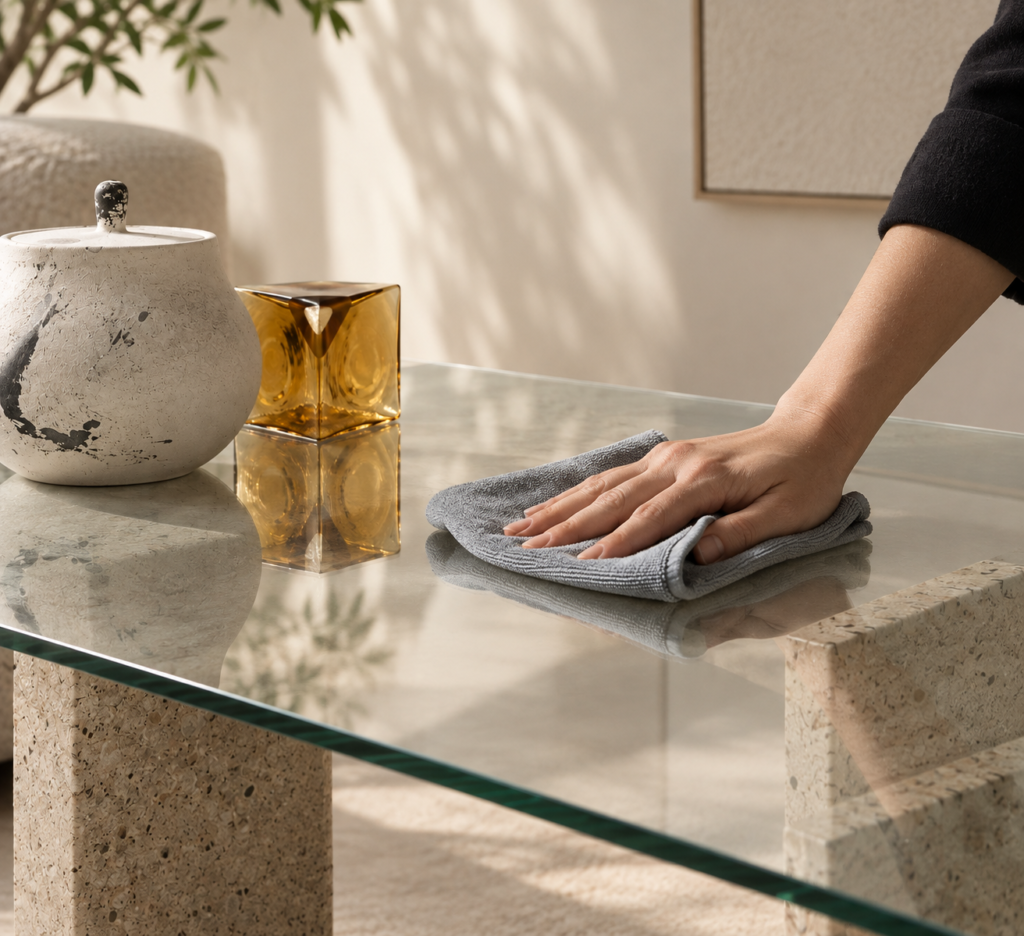
- Dust with a clean microfiber cloth daily or every few days. Paper towels and rough cloths might seem harmless but can leave fine scratches over time, especially with repeated use.
- Wipe up spills immediately, particularly acidic liquids like citrus juice, coffee, or vinegar-based dressings, which can etch and permanently dull glass if left sitting for too long.
Deeper cleaning
- A simple mix of equal parts white vinegar and water makes an effective, streak-free glass cleaner and is gentler than many commercial sprays.
- Spray the solution onto your cloth first rather than directly onto the glass. This prevents liquid from seeping into edges, joints, or any surrounding wood or metal frame.
- Dry and buff with a separate, clean, dry microfiber cloth, working in a circular motion to avoid streaking.
Handling and placement
- Always use coasters or trivets under hot dishes, mugs, or cookware — sudden heat directly on a glass surface can cause it to crack.
- Avoid dragging objects across glass tabletops; lift and place them instead to prevent fine surface scratches.
- Position glass furniture away from direct, harsh sunlight where possible, as prolonged heat exposure can stress certain treated or tinted glass over time.
What to avoid entirely
- Abrasive powders, scrubbing pads, or gritty sponges, which cause permanent micro-scratches
- Ammonia-based cleaners on tinted, frosted, or coated glass, which can strip protective coatings
- Cleaning glass in direct sunlight, since the solution dries too quickly and leaves streaks behind
Quick Comparison
| Care Step | Ceramic | Glass |
|---|---|---|
| Daily care | Dry dust, lukewarm water wipe | Microfiber dusting |
| Deep clean | Mild soap + soft sponge | Vinegar-water solution |
| Never use | Hot water, abrasive pads, bleach | Paper towels, gritty sponges |
| Biggest risk | Cracking from temperature shock | Scratching from rough materials |
Frequently Asked Questions
Can I use the same cleaner on both ceramic and glass? Not always. A vinegar-water mix is excellent for glass but can dull certain ceramic glazes over time, so it’s best to use lukewarm water and mild soap for ceramic instead.
Why does my ceramic piece have fine cracks even though I never dropped it? This is usually thermal shock — a sudden shift from hot to cold temperature, such as rinsing a warm piece under cold water. Always let ceramic adjust to room temperature before cleaning.
How do I remove hard water spots from glass? A vinegar-water solution left on the spot for a minute before wiping usually dissolves mineral deposits. For stubborn spots, a small amount of baking soda paste applied gently can help, followed by a thorough rinse and dry.
Is it normal for glass to scratch over time even with careful cleaning? Very fine, barely visible scratching can happen naturally over years of use, but using microfiber cloths instead of paper towels or abrasive materials slows this down significantly and keeps glass looking clear for much longer.
With the right daily habits and the correct technique for each material, ceramic and glass furniture can stay looking as elegant as the day they were bought. A few extra minutes of care each week is a small investment that protects pieces for years to come.


 Chair
 International Trend
 Bed & Bedding
 Cushion